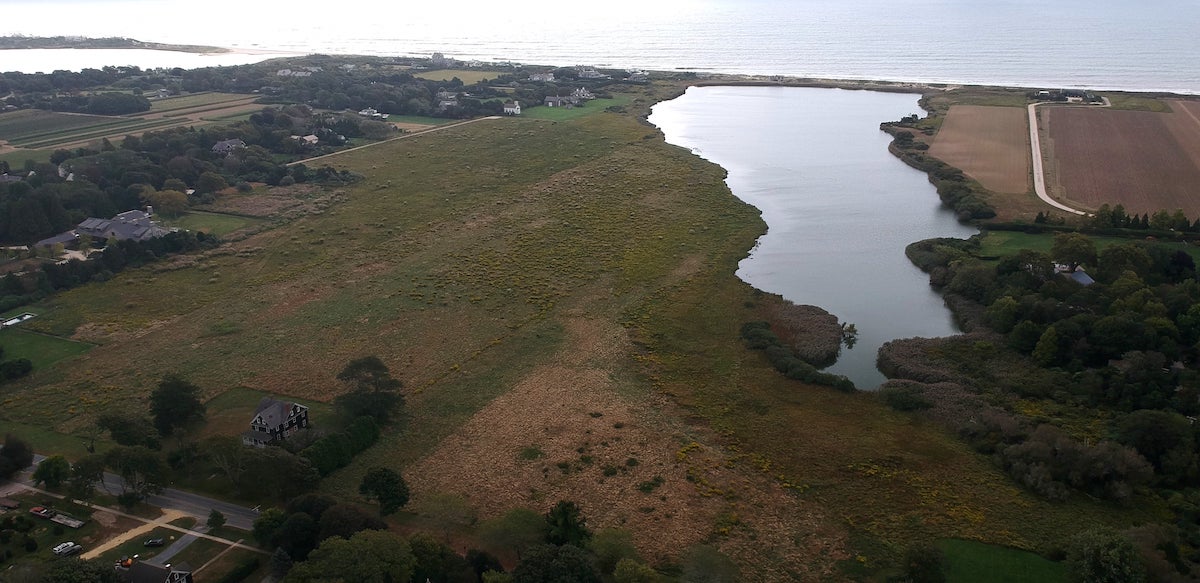
East Hampton Town is planning to buy a 30-acre parcel at historic 66 Wainscott Main Street for $56 million, using Community Preservation Fund, in what would be the largest CPF purchase in the town’s history.
The Town Board will hold a public hearing on the proposed purchase at its Thursday, Oct. 17 meeting at 6 p.m.
The property, which abuts Wainscott Pond, is a former farm dating back to 1648 owned by the Osborn family. It was purchased for $66 million by neighbor Ronald Lauder, who wanted to see the property preserved.
“This remarkable 30-acre parcel has long been recognized as a key asset in preserving the community’s character and natural beauty,” according to the town’s announcement of the planned acquisition, which noted that Mr. Lauder is willing to sell the parcel to the town “for considerably below fair market value.”
“This property, featuring stunning views of Wainscott Pond, is included in the Town’s Community Preservation Fund project plan and is situated within several protected districts, including the Agricultural Overlay District and the Harbor Protection Overlay District,” according to the town. “The acquisition will help safeguard vital wetlands and maintain the area’s ecological integrity.”
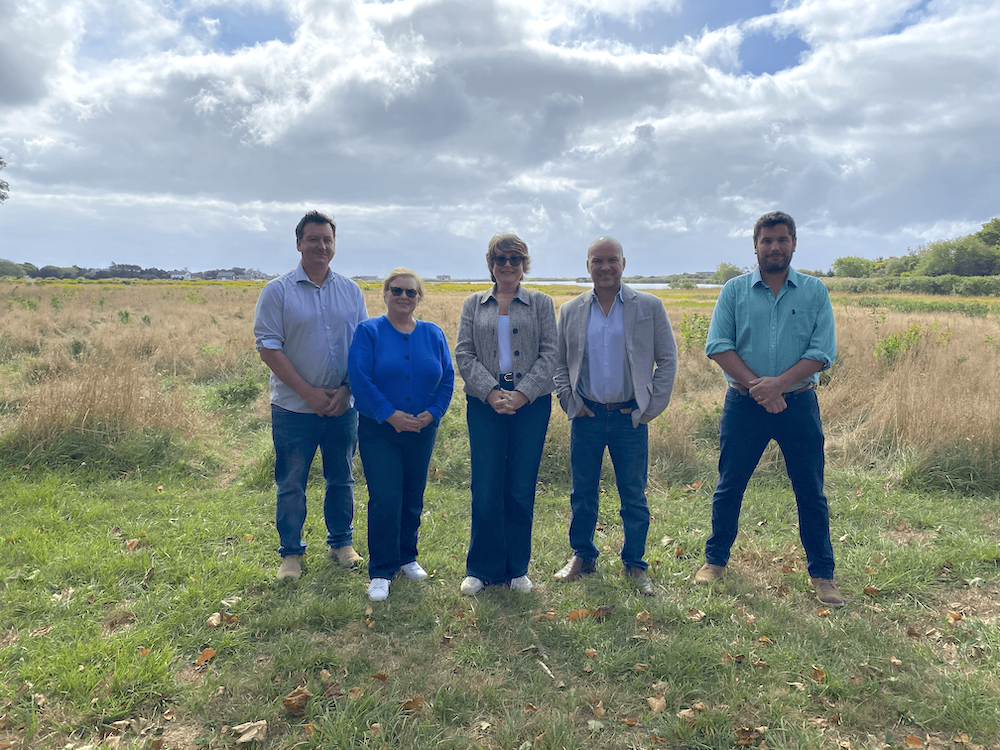
“Acquiring 66 Wainscott Main Street is an essential step toward preserving one of our town’s most iconic landscapes,” said Town Supervisor Kathee Burke-Gonzalez. “This property represents not just a view, but a commitment to maintain our community’s sense of place. Mr. Lauder’s vision and dedication to protecting our community’s natural and historical heritage set a remarkable example for us all. We are grateful for his generosity and leadership in this vital effort.”
The Osborn family’s presence on the South Fork began when Thomas Osborn settled in East Hampton in 1648. His son, John Osborn, is credited as a founder of Wainscott, and established a homestead in the area by 1668.
“Over the generations, the Osborns cultivated the land, contributing to the agricultural foundation of the community. The family’s influence was marked by their establishment of several notable structures, including a saltbox house built around 1675, which remained in their possession until the mid-20th century,” according to the town. “In 1904, Louisa Edwards Osborn, widow of John Melvin Osborn, built the current family farmhouse to serve as a summer boarding house, reflecting the burgeoning real estate and tourism market of the time. However, in 1922, following the death of her son Thomas, Louisa sold much of the family farmland, retaining only a small plot. This marked a pivotal moment in the Osborn history, as the family faced the transformation of their agricultural heritage amid rising real estate speculation.”
In 1927, Louisa’s nephew, Raymond Osborn and Augusta Halsey purchased the farmhouse lot and were later able to purchase the pond acreage, bringing it back into the family, before the property was transferred again in the recent years.
“The acquisition of 66 Wainscott Main Street is not only a pivotal moment for our community but also a heartfelt tribute to the legacy of my ancestors,” said Hilary Osborn Malecki, a descendant of the Osborn family. “This land has been a part of our family for generations, and its preservation honors the history and values that have shaped Wainscott. As we reflect on the sacrifices and contributions of those who came before us, it’s inspiring to see the Town take this important step to protect our shared heritage. This property represents not just a scenic view, but the stories of hard work, resilience, and deep connection to the land that the Osborns embodied”
Wainscott Pond has been identified as an impaired water body under the New York State Department of Environmental Conservation Priority Waterbodies List.
The pond, which is owned by the East Hampton Town Trustees, has experienced frequent harmful algal blooms, and a recent monitoring study by the SUNY Stony Brook Gobler Laboratory and funded by the Trustees showed that Wainscott Pond is the most consistently impacted water body in East Hampton. The average concentration of blue-green algae also reached levels that significantly surpassed the state’s recreational safety limits.
The acquisition of the 66 Wainscott Main Street property, which abuts one-third of the pond’s shoreline, would allow for public access and also enable further water quality monitoring through the Town’s CPF Water Quality Improvement program, allowing analysis to identify pollution sources, including stormwater runoff, agricultural activity, and outdated septic systems, according to the town.
In addition to its historical significance, the flora and fauna of 66 Wainscott Main Street underscore its ecological importance. The property primarily consists of meadowland, interspersed with patches of woodland along the western edge, and encompasses approximately 2.5 acres adjacent to Wainscott Pond, which is critical for both biodiversity and water quality.
The property consists primarily of meadowlands that are a habitat for native and non-native grasses, wildflowers, and shrubs, and is home to an array of wildlife including red foxes, white-tailed dear, wild turkeys, diamondback terrapins and an array of migratory and resident birds, including the great blue heron and the eastern towhee.
Keep Independent News on the East End
The Beacon is able to provide all of our content online free of charge thanks to support from our readers. Be a vital part of keeping our community informed!