The election system in the United States might just prove to be truly resilient after the polls close on Tuesday, two election experts agreed at a recent League of Women Voters forum.
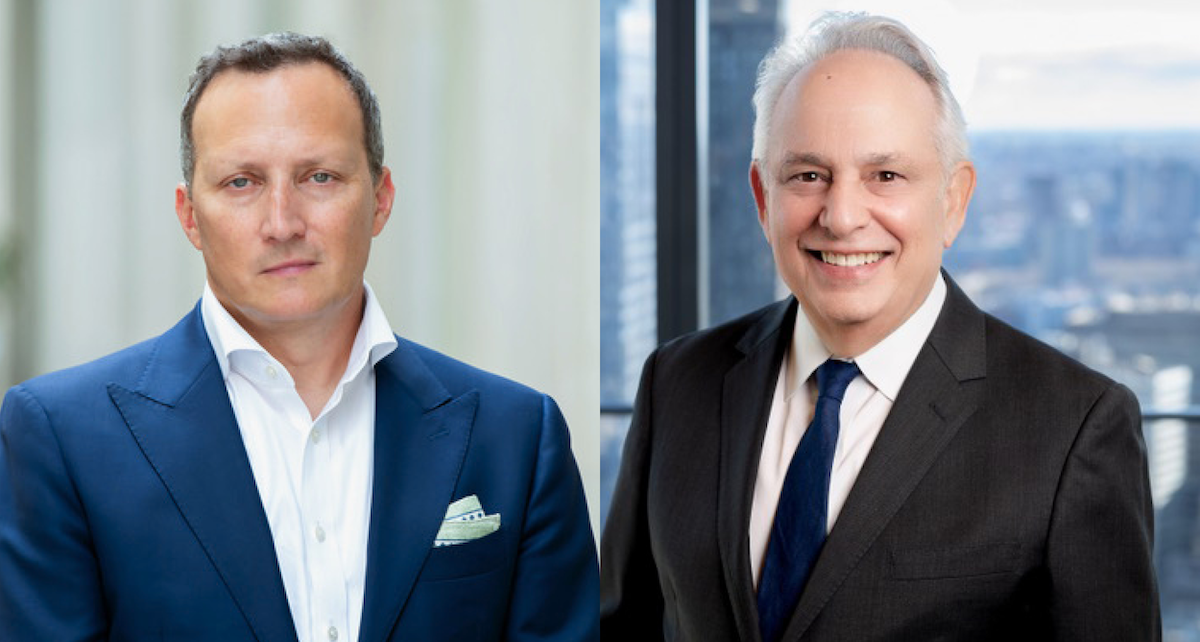
In the Sept. 30 virtual forum, “Voting Rights and the 2026 Midterms: Election Challenges, Threats and Integrity,” two prominent election law experts—David Becker and Jerry Goldfeder — both seemed optimistic about the American election process, which is overseen by individual states and run by local boards of election in what they believe will prove to be a resilient system.
Pictured Above: David Becker (l) and Jerry Goldfeder (r) discussed voting rights and the 2026 elections at the Leadgue’s virtual forum.
Mr. Becker is the founder and executive director of the nonpartisan Center for Election Innovation & Research, based in Washington D.C., and Mr. Goldfeder is the director of the Voting Rights and Democracy Project at Fordham Law School.
Mr. Becker said his optimism stems from the fact that courts have already blocked nearly all of the 30 cases the administration has filed challenging the election process.
Since federal law bans massive changes to the voting process within 90 days of an election, Mr. Goldfeder added, it will be unlikely that any major legal challenge to the election process will emerge in this “quiet period.”
“This is the story of the resilience of our election system, and the resilience of our institutions,” said Mr. Becker. “We have never seen this kind of attack on our systems. We’ve never seen the federal government, which used to be a partner for states, become a potential adversary. But that effort has failed. It’s been blocked by the courts.”
“Peoples’ votes are going to count, and I think we’re going to see record turnout nationwide,” he added.
Mr. Goldfeder was slightly more cautious.
“Our insititutions are strong, and the reason they’re strong is because Americans are resilient,” he said. “The folks in Suffolk County can rest assured they have a Board of Elections that knows what its doing and has done it well for many years. They’re very professional. But nationwide, there will be problems throughout various polling places… If there’s a huge turnout and the margins are comfortable, there’s very little those who want to challenge elections can do. They can go to court, but they will fail.”
The two experts shared a wide range of views through the hour-long conversation, moderated by League of Women Voters of The Hamptons, Shelter Island & the North Fork’s Government Committee chair, Andrea Gabor. The conversation was aired on Sea-TV Southampton, and can be viewed on Sea-TV’s YouTube channel below.
In this year’s First Congressional District race between incumbent Republican Nick LaLota and Democratic challenger Chris Gallant, both candidates declined to participate in debates, including the traditional ones held by the League’s East End chapter.
Ms. Gabor wondered if skipping debates, which the Boston Globe has described as an “established strategic default,” will suppress voter turnout.
Both election experts said it’s hard to pinpoint such factors.
Mr. Becker said election experts have been unable to discern whether changing voting methods, including mail ballots, open primaries and ranked choice voting, has an impact, but “turnout in midterm elections is generally low.”
He said the highest midterm election turnout in modern times was in 2018, when 50 percent of registered voters voted, while four years before, in 2014, saw the lowest midterm voter turnout in modern elections — 36 percent. This year, he said, he’s optimistic that between 53 and 55 percent of voters will turnout.
Mr. Goldfeder said in New York, some local and state candidates who take public financing are required to participate in debates, but those rules don’t affect congressional candidates.
Mr. Becker was extremely optimistic that there will be no ICE, FBI or military presence at the polls, because it is a federal felony “for anyone to order troops or armed men near any voting location.”
He added that, if those people were sent to the polls on Election Day, it would likely suppress Republican turnout, since Democratic voters have become accustomed to voting early.
“We shouldn’t pretend it’s not going to happen. We should be prepared,” said Mr. Goldfeder. He added that it’s “extremely unlikely” such people would be inside a polling place, but if they are seen outside polling places here “the sheriff’s office and the police will get involved. But people should not take it upon themselves to get into a shouting match…. Calmness is the order of the day.”
“No one is sitting back and saying everything is fine and we’re just going to keep our fingers crossed,” said Mr. Becker. “There are so many people working to try to bolster the institutions as much as they can, because they need to because of the threats.”
Both experts said they have faith that secretaries of state and local boards of elections will do the right thing by certifying the results — particularly if voter turnout is high.
Mr. Goldfeder said he feels county boards of elections in New York are particularly strong.
“In New York, the local boards of elections are bipartisan — they protect each other. They look out for each other,” he said. “But there are secretaries of state who are election administrators — it depends on the way states set up their elections. They’re partisan election regulators, but they have duties under the law. They’re supposed to certify the winners as winners and the losers as losers.”
Mr. Becker said that, in cases he’s seen where counties have attempted to circumvent election law, the secretaries of state in those states, “in every case, Republicans and Democrats, have stood firm for the rule of law. They have vigorously defended their states’ sovereignty, and will continue to do so.”
On the role of disinformation, particularly from foreign sources, both election experts said they have faith that people will seek out reliable information.
“Don’t people know enough by now to separate the wheat from the chaff?” asked Mr. Goldfeder.
“There will be an onslaught of disinformation, and it’s going to be really important that we all have the skepticism Jerry thinks we have,” said Mr. Becker. “We should rely on official sources…. But this is not new. We’ve dealt with this before, and we will deal with it again. It will definitely continue post election.”
“We’ve had a set of democratic institutions for a longer period of time than any country in the history of the world,” said Mr. Goldfeder. “We have succeeded in times of grief, war and depression. People go to the polls and make a choice.”
Mr. Becker urged listeners to tune into his recent podcast, “The Unstoppable Vote,” about just this subject, and urged lawyers who want to donate their time to responding to election challenges to visit his non-profit’s website at eoldn.org.
“In 250 years of our nation’s history, we have never once postponed or cancelled a federal or general election,” he said, including in times of war, pandemics and disasters. Elections were not even cancelled in 1812, when the British had taken over the city of Detroit, or in 1814, when the British burned down the White House.
“We held elections anyway,” he said. “That’s an incredible testament to the people who run elections. There’s nothing the people who want fear and despair would want less than for us to not freak out.”
Keep Independent News on the East End
The Beacon is able to provide all of our content online free of charge thanks to support from our readers. Be a vital part of keeping our community informed!
Advertisement